News
How Prototyping Reduces Errors in the Industrialization Phase
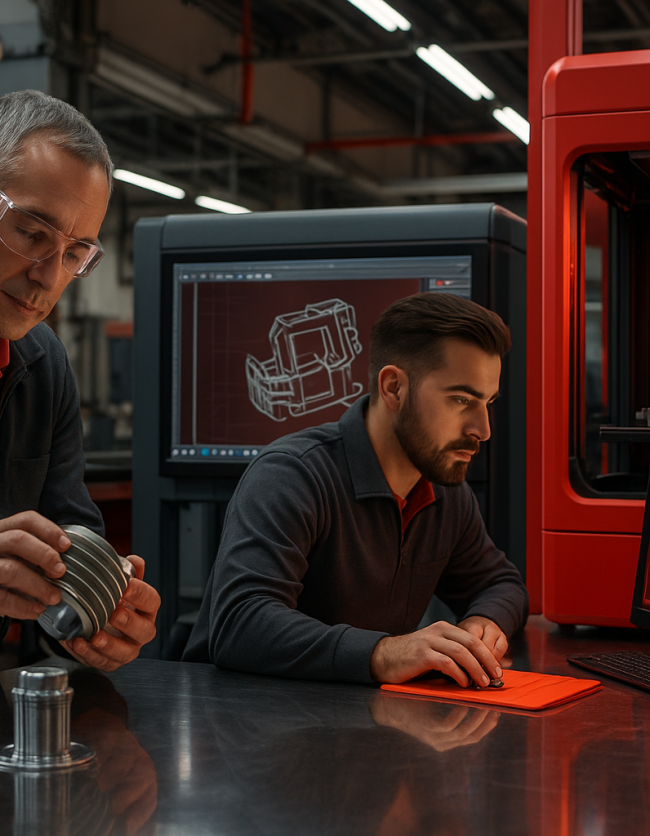
In modern industrial engineering, prototyping bridges the gap between concept and production, anticipating failures, reducing costs, and ensuring large-scale efficiency.
In industrial projects, every technical decision directly impacts product quality and feasibility. Before a new component reaches the production line, it must be validated, tested, and refined and that’s where prototyping comes in.
By creating physical or digital models, engineering teams can identify flaws and optimize processes during the early stages of development, avoiding rework, waste, and delays. More than a technical step, prototyping is a strategy for prevention and quality assurance.
What Is Prototyping in Industrial Engineering?
Prototyping is the process of turning a virtual project into a tangible version, whether a physical model, digital simulation, or functional mock-up. Its goal is simple yet powerful: test, measure, and validate before mass production begins.
This approach allows engineers to visualize details, detect interference, and correct issues before full-scale manufacturing, reducing risks and accelerating time to market.
Why Prototyping Reduces Errors and Costs
Engineering errors can be expensive in time, materials, and reputation. By testing a prototype, teams can validate dimensions, fit, strength, ergonomics, and functionality before starting production.
In practice, this means:
• Less rework on the production line.
• Lower material waste.
• Faster, data-driven decision-making.
• Continuous improvement in production processes.
Prototyping, therefore, is a tool for efficiency, reliability, and excellence.
The Technology Behind Modern Prototyping
Global Group employs cutting-edge tools and technologies to accelerate and refine the prototyping process, including:
• CAD/CAE software for modeling and simulation.
• Industrial 3D printing for rapid creation of physical parts.
• Digital measurement and metrology tools for dimensional validation.
• Lean and Six Sigma methodologies for process control and time optimization.
These technologies ensure millimeter-level precision and high-speed execution, two essential pillars of competitive industrial projects.
From the Lab to the Production Line: The Global Difference
At Global Group, prototyping is part of a culture of excellence. Our engineers follow the product from laboratory to production, ensuring that every technical adjustment maintains the integrity of the design while optimizing mass production.
This hands-on approach, combined with advanced testing and analysis tools, ensures that each result is efficient, consistent, and ready to scale.
Results That Speak for Themselves
Through the continued application of technical prototyping, our clients achieve measurable improvements:
• Up to 30% reduction in development costs.
• Significant decrease in rework.
• Optimized production timelines and workflows.
• Increased confidence in the final product.
These results reinforce the role of preventive engineering in building faster, more precise, and sustainable industrial processes.
Prototyping is the link that connects creativity, technology, and efficiency. By adopting this practice early in the development cycle, companies can reduce risks, improve quality, and strengthen competitiveness in the global market.