News
How Do You Test a Technology That Learns?
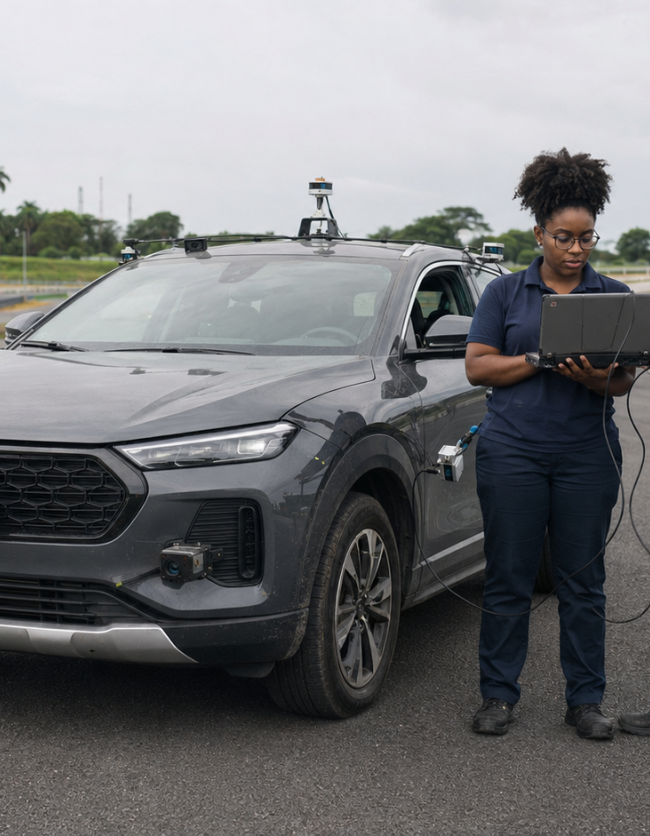
Validating artificial intelligence systems requires representative data, simulation, physical testing, and version control to turn automated decisions into safe and reliable results.
A vehicle may recognize lane markings, detect pedestrians, read traffic signs, and adjust functions using information captured by sensors. Validation must show how the system responds when real-world conditions become less predictable.
System behavior also depends on data
In conventional systems, much of the behavior can be traced directly to programmed rules. With artificial intelligence, performance is also shaped by the examples used to train the model.
Repetitive images, incomplete records, or limited scenario diversity can create weaknesses that only appear during operation. A test completed on a dry track in good lighting says little about performance in rain, glare, sensor contamination, or around faded road markings.
Each scenario must represent a relevant operating condition and produce evidence that engineers can review.
Does AI learn while the vehicle is on the road?
In most automotive applications, the model installed in the vehicle remains unchanged during operation. Data may be collected for analysis, but training generally takes place in a controlled development environment.
When improvements are required, a new version is trained and tested before it reaches the vehicle. Systems designed to learn during operation require stricter boundaries, continuous supervision, and a safe response if their behavior moves outside the expected range.
What must be defined before testing begins?
Validation starts with the function the system is expected to perform. The engineering team defines where it may operate, which conditions it must recognize, what responses are acceptable, and how it should handle uncertainty.
A perception system may need to recognize people at different distances, in different positions, with different skin tones, and under changing light conditions. It must also respond to partially hidden obstacles and temporary sensor failures.
These criteria guide data selection, scenario development, and performance measurement. Without clear acceptance criteria, the number of tests may grow while the conclusion remains weak.
How is an AI system validated?
Validation takes place in layers. Simulation allows engineers to run thousands of variations quickly and safely. Weather, time of day, speed, object position, and the behavior of other vehicles can be changed without putting people or equipment at risk.
Electronic control units, sensors, and software are then integrated on test benches. This stage measures response times, communication between components, and reactions to controlled faults.
Finally, instrumented vehicles are evaluated on test tracks and under controlled real-world conditions. Vibration, temperature, dust, glare, and physical interference can reveal behavior that is difficult to reproduce fully in a virtual environment.
Simulation, bench testing, and vehicle testing provide different types of evidence. Confidence grows when the results remain consistent across all three.
Why must every version be traceable?
Changes to the data, parameters, or software can alter the system’s response. Every result must be linked to the exact model version, vehicle configuration, and test conditions.
When a new version is released, engineers repeat previously approved checks to confirm that the update has not affected other functions. This process, known as regression testing, prevents one correction from creating a new problem elsewhere.
Traceability also supports failure investigation, version comparison, and technically justified release decisions.
Which references guide automotive AI safety?
ISO/PAS 8800:2024 addresses artificial intelligence safety in road vehicles. The NIST AI Risk Management Framework provides practices for identifying and monitoring AI risks. In 2026, UNECE published a preliminary reference document on AI in regulated automotive safety systems.
Reliable systems require clear operating limits, technical evidence, and monitoring throughout their use.
Engineering for reliable decisions
Validating a technology that learns means understanding its limits with the same care applied to its performance. Representative data, well-planned tests, version control, and human analysis make the process verifiable.
Global Group’s experience in engineering, testing, and validation helps turn complex requirements into safe, consistent technical decisions designed for real-world operation.