News
Agricultural machinery design: engineering, function and field performance
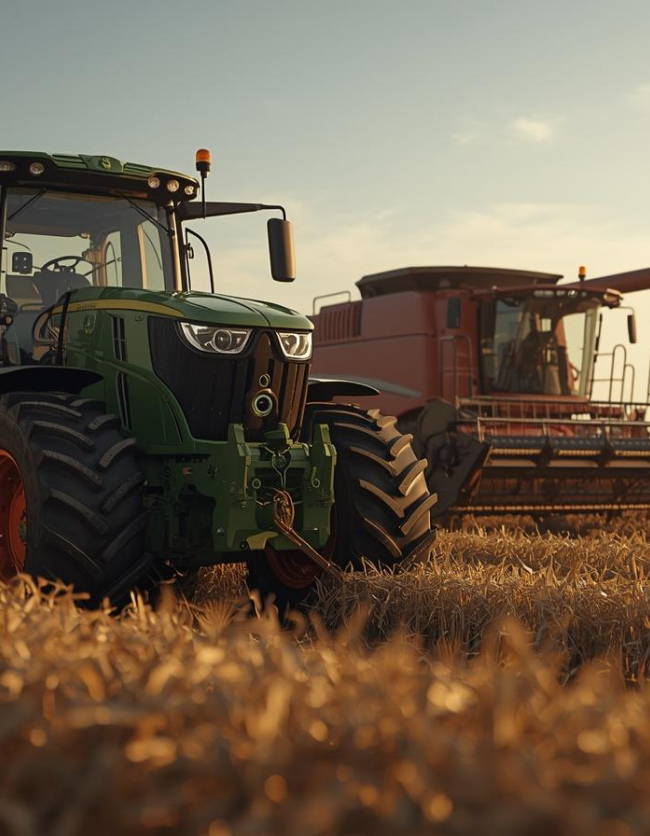
Behind tractors and harvesters, there is a development process that combines engineering, ergonomics, visibility, durability and operational efficiency to meet real field demands.
When people think about agricultural machinery design, they often start with appearance. In reality, the development of tractors and harvesters begins much earlier: with function, operational demands and real working conditions in the field. Terrain, dust, vibration, climate, long working hours and different crop conditions directly influence every design decision. That is why, in agriculture, design and engineering work together to turn technical requirements into productivity, safety and performance.
In agriculture, design starts with function
In the agricultural sector, design is not primarily about aesthetics. It is about solving real operational challenges. Every machine must be developed to deliver robustness, stability and efficiency in demanding environments that require reliability throughout intense work cycles.
This means taking an integrated product approach. It is not enough for a machine to perform well under ideal conditions. It must also maintain consistent performance under changing soil conditions, weather, workload and extended operating hours. In many ways, the field itself shapes the project.
Ergonomics is also performance
In agricultural operations, productivity and operator comfort are closely connected. Driving position, visibility, control access and cabin layout all have a direct impact on how efficiently the operator can work throughout the day.
When machinery is developed with ergonomics in mind, operators can work with greater safety, less physical strain and better precision. This helps reduce fatigue, supports faster decision-making and contributes to more consistent performance during long work shifts. In high-demand environments, ergonomics is no longer optional. It is part of performance.
Visibility and control are part of the design
In tractors and harvesters, visibility is not just a comfort feature. It is a strategic factor for safety, precision and efficiency. Design must consider viewing angles, cabin positioning, dashboard layout and interaction with onboard systems to support faster and more accurate decisions in the field.
A well-designed machine helps the operator better understand the surrounding environment, monitor system performance and respond more quickly to operational changes. This connection between interface, control and usability strengthens productivity while reducing the risk of error.
Durability is a core requirement
Agricultural environments create constant wear. For that reason, materials, structures, joints and component layouts must be designed to withstand impact, dirt, vibration and continuous exposure without compromising functionality.
Durability in agricultural machinery is not just about using stronger parts. It is about building an intelligent system where each element performs reliably in real-world conditions. Effective design protects long-term performance while supporting the demands of intensive operations.
Maintainability must also be part of the project
Efficient development goes beyond machine use. It must also account for inspections, technical interventions and maintenance routines throughout the product lifecycle.
Component accessibility, assembly logic, serviceability and system organization all directly affect machine uptime in the field. When design supports easier maintenance, the result is greater operational efficiency, less downtime and better equipment utilization over time.
Agricultural design is applied problem-solving
Tractors and harvesters are the result of work that integrates technical expertise, usability and operational reality. In agriculture, design is not a visual layer added after engineering. It is part of the solution itself. It connects field demands to operator experience, equipment durability and smarter performance delivery.
As agricultural operations become more complex and performance-driven, companies that treat design as a strategic engineering tool are more likely to build solutions that are practical, resilient and better aligned with the realities of the field. Contact us.