News
Traceability in the Agricultural Cycle: From Field to Strategy
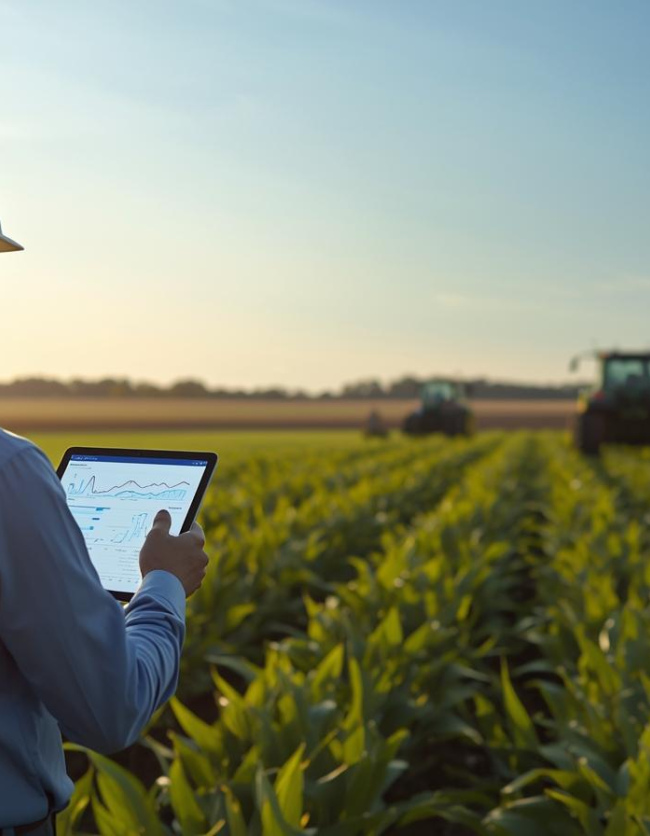
How to turn operational data into a competitive advantage for producers and industry.
When we talk about traceability in agribusiness, many people still think only about knowing which farm the production came from. In practice, the concept is much broader: it is about seeing the operation as a whole, from the first seed planted to the last truck loaded, with reliable data at every stage. In a scenario where deadlines are tight, harvests are sensitive to climate, and industry demands predictability, it is no longer possible to operate in the dark. Traceability stops being a differentiator and becomes a strategic part of the business.
In many agricultural operations, the flow still works in a fragmented way: planting, crop management, harvesting, storage, and shipping all happen, but records are partial, scattered, or hard to access. This makes it difficult to understand where delays arise, hides waste of time, inputs, and labor, and increases risk when negotiating with industry. When traceability is well structured, the agricultural cycle stops being a black box. Each stage has start and end times, defined responsibilities, machines involved, records of soil and climate conditions, plus the history of stoppages, rework, and incidents. That level of visibility completely changes the quality of management.
In modern agribusiness, it is not only the grain that matters, but also the information that comes with it. Machine hours, harvesting windows, fuel consumption, team performance, and failure occurrences form a technical panel that makes it possible to better plan resource use, adjust fleet sizing, anticipate maintenance, reduce rework and unplanned downtime, and make faster decisions based on facts rather than perceptions. Traceability turns the field into a measured, comparable, and improvable environment. Instead of “it was hectic, but it worked,” managers have clear indicators showing where they gained time, where they lost it, and where they can still optimize.
Well-executed traceability benefits the entire chain. For those in agricultural operations and for producers, it means greater control over risks and costs, a reliable track record to compete in the market and negotiate contracts, the ability to prove compliance with legal and ESG requirements, and a solid foundation for planning future harvests. For industry, whether automotive, agricultural machinery, auto parts, food, or other segments connected to agribusiness, traceability offers delivery predictability, confidence in raw material quality, lower risk of supply chain disruption, and more security when associating their brand with partners in the field. In the end, both field and industry gain the same asset: trust.
This topic is directly connected to the ESG agenda. Companies that depend on agribusiness in their supply chain are under pressure for greater transparency of origin, consistent environmental indicators, social care for workers, and strong governance over data and processes. Robust traceability is not just a well-filled spreadsheet: it is the foundation for proving, with data, that the operation is aligned with what the market, investors, and society expect.
Building this scenario is not just a matter of buying a system or installing sensors. It is the result of combining process design, integration between people, machines, and technology, and technical support close to the operation. This is where engineering makes the difference, and where Global Group positions itself. With a technical and strategic view of the operation, it becomes possible to map the agricultural cycle end to end, define which data really matters, connect machines, sensors, and teams in a coherent flow, structure dashboards and routines that make traceability practical rather than bureaucratic, and turn information into action and action into results. More than generating data, Global Group’s engineering helps generate meaning from that data.
Agribusiness is going through a moment where productivity, sustainability, and predictability are no longer separate narratives, they now move together. Traceability across the agricultural cycle is one of the keys to this transformation: it brings visibility to what used to be invisible, reduces waste, strengthens relationships with industry, and raises the level of professionalism in operations. In the end, every well-collected and well-used data point is worth as much as every grain harvested.
If you want to take your agricultural operation to the next level with end-to-end traceability and technical support, get in touch with the Global Group team and discover how we can turn your field data into real strategic results.